
Of all the lands the Scots settled, none is more deeply Scottish than Canada. From the Maritimes to Ontario and beyond, Scottish emigrants—especially Highlanders swept up in the Clearances—built communities where the Gaelic language, the Presbyterian and Catholic faiths, and Highland culture endured for generations. If your family emigrated to Canada, they joined one of the great Scottish stories of the New World. This guide traces where they went and what they built.
Nova Scotia: New Scotland
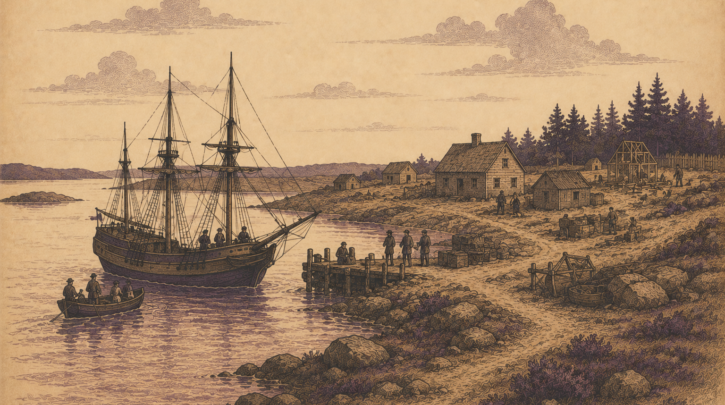
The very name declares the connection: Nova Scotia is Latin for “New Scotland.” The province became a great magnet for Scottish, and especially Highland, emigration. The arrival of the ship Hector at Pictou in 1773, carrying Highland emigrants, is remembered as an iconic moment—an early landmark in a flood of Highland settlement that would follow over the next century. Across mainland Nova Scotia and, above all, on the island of Cape Breton, Highlanders settled in such numbers that Scottish Gaelic became a living community language, spoken and sung for generations and surviving, in pockets, into modern times.
Not sure where to start with your Scottish ancestry?
Get the Scottish Genealogy Quick-Start Checklist — a 5-step path to your first real ancestor record, plus the one archive that holds almost everything.
Prince Edward Island and Glengarry
Scottish settlement reached well beyond Nova Scotia. Prince Edward Island drew many Highland emigrants, including Catholic Highlanders. In what is now Ontario, Glengarry County became a stronghold of Highland settlement—named for the Highland district many of its settlers came from, and long a bastion of Gaelic and Highland culture. Elsewhere, from the Red River settlement in the west to communities across the country, Scots—Highland and Lowland alike—put down roots, often clustering by their region of origin through chain migration.
Why Canada drew the Scots
Several forces made Canada so Scottish. It offered abundant land at a time when Highlanders were being driven off their own; it lay within the British Empire, easing passage and settlement; and once Scottish communities were established, they drew relatives and neighbours after them. For cleared and famine-struck Highlanders in particular, Canada—especially the Maritimes—became the natural destination, and the transplanting of whole communities meant that Highland culture sometimes flourished more freely in Canada than in the emptied glens back home.
If your family settled in Canada, the trail leads back through the Canadian records to a Scottish parish. See how in finding your emigrant ancestor and the records hub.
Researching a Scottish-Canadian line
Tracing a Scottish family in Canada follows the familiar path: work back through the Canadian records—census, vital records, church and land records—to identify the immigrant and, ideally, their Scottish origin, then cross to the Scottish records to continue. Canada’s strong Scottish communities are a help, because local histories, church records and community traditions often preserve the memory of where settlers came from. And because Scots clustered by origin, identifying where a settlement’s other families came from in Scotland can point to your own family’s parish.
A living heritage
The Scottish heritage of Canada is not a museum piece but a living tradition, kept up in Highland games, Gaelic culture, clan societies and the pride of communities from Cape Breton to Glengarry in their Scottish roots. For descendants, this means both a warm welcome and rich resources when tracing the family—and, often, a heritage trip to a Canadian community as moving as any visit to Scotland itself. Understanding your family’s place in the Scottish settlement of Canada connects their emigration to the vibrant diaspora culture their descendants still carry, and points the way back to the Scotland they came from.
Canadian records that help
The Canadian side of a Scottish-Canadian search offers rich material worth knowing. Canadian census records (which often record origin and can help distinguish Highland from Lowland settlers), church records of the Presbyterian and Catholic congregations the Scots founded, land and settlement records, and a strong tradition of local and community histories all help identify an immigrant and, frequently, their Scottish origin. Cape Breton and Glengarry in particular have been much studied, and their Gaelic and Highland heritage is well documented. Because Scottish settlers clustered by their region of origin, a local history that records where a settlement’s founding families came from can hand you a parish to test—so the Canadian records are not merely the place your search starts, but often where the crucial clue to the Scottish origin is hiding.