
For those with Highland roots, a Scottish heritage trip has a dimension few other ancestries offer: the chance to visit your clan country—the glens, castles and lands your clan’s name belongs to, and the living world of clan societies, gatherings and Highland games. It is one of the most stirring experiences in all of heritage travel. This guide explains how to explore your clan heritage, and—in keeping with our honest approach—what it does and does not mean to walk your clan’s country.
Clan lands and glens
Most Highland clans are associated with a particular territory—the glens, straths and islands that were their heartland before the clan system was broken and the Clearances emptied so much of the Highlands. Visiting your clan’s country—standing in the glen your name comes from, seeing the landscape your ancestors and their clan inhabited—is profoundly moving, all the more so knowing the history of loss that followed. Many clan territories are among the most beautiful parts of Scotland, and Scotland’s right to roam lets you walk much of the land responsibly, following the access code.
Not sure where to start with your Scottish ancestry?
Get the Scottish Genealogy Quick-Start Checklist — a 5-step path to your first real ancestor record, plus the one archive that holds almost everything.
Castles and clan seats
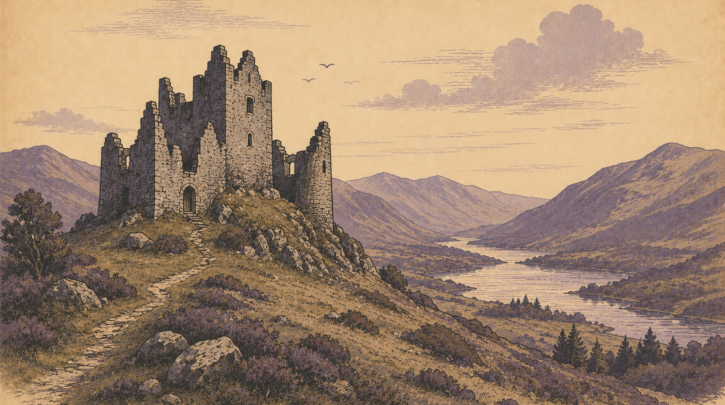
Many clans had a castle or seat—the stronghold of the chief—and a good number survive, some still connected to the clan, some open to visitors, some ruined and romantic. Visiting your clan’s castle or historic seat connects you to the clan’s story and its chiefs, and many such castles house exhibitions on the clan’s history. Alongside the castles, some clans maintain a clan museum or visitor centre devoted to their history, heritage and diaspora—wonderful places to deepen your understanding and often to get help tracing your own connection to the clan.
Clan societies, gatherings and games
The clan is not only history but a living community, and this is where clan heritage travel comes alive:
- Clan societies — most clans have societies (often worldwide) that welcome descendants, maintain clan sites, hold events, and can help you explore your connection.
- Clan gatherings — periodic gatherings bring clan members from around the world to the clan’s country or to great national events, a powerful experience of belonging.
- Highland games — held across Scotland (and the diaspora) especially in summer, with their athletics, piping, dancing and clan tents, they are a joyful celebration of Highland and clan culture.
An honest word, in keeping with our clan guides: visiting your clan country is meaningful whether or not you descend from the chief’s own bloodline. Remember that bearing a clan name does not by itself prove chiefly descent—many clanfolk were tenants and followers who took the name. But the clan’s country, history and community belong to all who carry the name and its story, so explore and enjoy your clan heritage freely, while keeping an honest understanding of what your surname does and does not establish about your ancestry.
Explore your clan country as part of a wider roots trip. Plan it with the heritage trip guide, and understand your clan honestly through the clans and surnames guides.
Planning a clan heritage journey
To build a clan element into your trip, start by identifying your clan and its country, then locate its castle or seat, any clan museum or visitor centre, and its society—whose website or contacts can advise on what to see and any gatherings or games during your visit. Combine the clan sites with your ancestral parish, since your specific family lived in a specific parish within (or near) the wider clan country, and the two together give you both the intimate family place and the grand clan story. Grounding it all in your documented research—and, if you wish, a clan DNA project—ensures your clan heritage travel rests on your real connection to the clan, making the glens and castles you visit truly, and knowingly, your own.
Combining clan country with family research
The richest clan heritage journeys hold two scales together: the grand clan story—the glens, castles and history of the whole clan—and your own family’s place within it, the specific parish and people you descend from. It is worth being clear that these are not the same thing. Your clan country is the broad territory and heritage your name belongs to; your family history is the particular thread of it that is yours, documented in the records of a specific parish. Visiting the clan castle and the ancestral parish on the same trip gives you both—the sweep of the clan’s saga and the intimacy of your own family’s hearth—and understanding the distinction keeps your sense of your heritage both grand and honest.
Before you travel, then, do the groundwork on both scales. Establish your parish and family through research, and separately learn your clan’s history, country and sites. If you wish to explore the clan connection more deeply—and to test it honestly—a clan or surname DNA project can reveal which lineage of the clan you belong to and whether you connect to its core kindred. Armed with both the documentary and, if you choose, the genetic picture, you arrive in clan country knowing exactly how you fit into the story you have come to walk through—which makes every glen and castle mean more.