
Here is where Scottish DNA gets genuinely special. Because so many Scottish surnames—above all the Mac names—follow the male line, and because Scotland has such a strong clan and surname tradition, Y-DNA testing and the clan and surname projects built around it are one of the most powerful and distinctive tools in Scottish genetic genealogy. They can test a surname line, connect you with genetic kin, and—honestly—test whether you descend from a clan’s kindred rather than merely sharing its name. This guide explains how they work and how to use them.
Why Y-DNA suits Scottish surnames
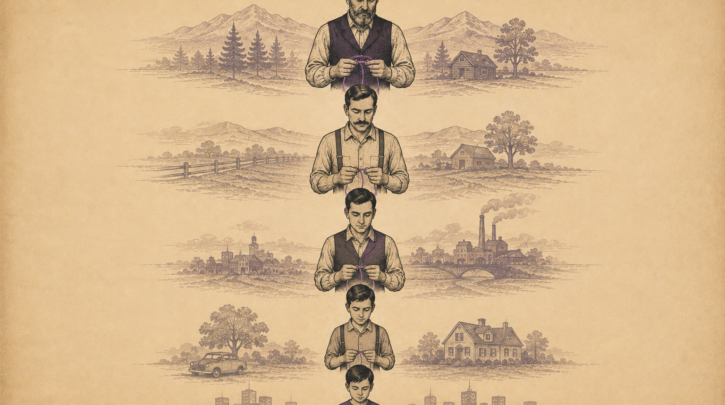
Y-DNA is passed from father to son, almost unchanged, down the strict paternal line—the very same line that a surname follows. This makes it uniquely suited to surname research: men who share a surname because they share a paternal-line ancestor should also share a matching Y-DNA signature, while men who merely happen to have the same surname by coincidence will not. For Scotland, where a clan name might be carried both by the chief’s kindred and by unrelated tenants who adopted it, this is exactly the tool needed to tell the two apart—something no amount of documentary research or autosomal testing can reliably do once the paper trail runs out.
Not sure where to start with your Scottish ancestry?
Get the Scottish Genealogy Quick-Start Checklist — a 5-step path to your first real ancestor record, plus the one archive that holds almost everything.
What clan and surname projects are
A surname or clan DNA project gathers men of a given surname or clan who have taken a Y-DNA test, and compares their results to map the genetic lineages within that name. Hosted principally at FamilyTreeDNA and often run by volunteers connected with clan societies, these projects have, for many Scottish clans and surnames, built up substantial databases over the years. By joining, you compare your Y-DNA against everyone else of your surname or clan in the project, and see which genetic lineage—which branch of the name—you belong to.
What they can reveal
For a Scottish surname line, these projects can answer questions that documents alone cannot:
- Whether two families of the same surname share a common paternal ancestor — confirming or disproving a connection the records leave uncertain.
- Which genetic lineage of a clan or surname you belong to — since many clans contain several distinct paternal lineages.
- Whether you descend from a clan’s core kindred — an honest test of the clan-descent question, rather than assuming descent from the surname alone.
- Genetic kin to connect with — other men of your line, often with shared research and family knowledge.
A caution to match the honesty of our clan guides: Y-DNA can confirm a shared paternal line, but the idea of a single definitive “clan gene” or chiefly signature is more complicated than it sounds, since clans often contain multiple unrelated lineages and interpretations evolve as databases grow. Treat project findings as strong evidence about paternal lineage, read the project’s own guidance, and avoid over-claiming a chiefly descent the data may not actually support.
A Scottish surname is ideal for this kind of testing. Find the Y-DNA options on the DNA hub, and pair the results with documents via connecting DNA to Scottish records.
How to get started
To use a clan or surname project, you generally take a Y-DNA test (which must be taken by a man, since only men carry the Y chromosome—so a woman researching her paternal Scottish line would ask a father, brother or paternal uncle or cousin to test), then join the relevant surname or clan project, usually free to join once you have tested. The project administrators can help interpret your placement among the lineages. Choose a test with enough resolution to be meaningful for lineage work, as the more detailed Y-DNA tests distinguish lineages far better than the basic ones; the DNA hub explains the options. Combine the result with your documentary surname research for the fullest picture.
A tool that fits Scotland perfectly
Clan and surname DNA projects are, in a sense, the perfect marriage of Scotland’s surname culture and modern genetics: a way to explore, and honestly test, the clan and surname connections that mean so much in Scottish heritage. They can break through walls the paper records cannot pass, connect you with genetic cousins around the world, and replace romantic assumption with real evidence about your paternal line. For anyone with a Scottish surname—and especially a Mac name—they are one of the most rewarding avenues in all of Scottish genealogy, and a compelling reason to test. Grounded, as ever, in the documented records, they turn the question “do I really descend from this clan?” from a matter of hope into a matter of evidence.